
Mount to Coast H1 Review | The Trail Shoe Making Me Want to Run Ultras

Why I Bought the Mount to Coast H1
I bought this shoe because I needed a trail shoe. Simple as that.
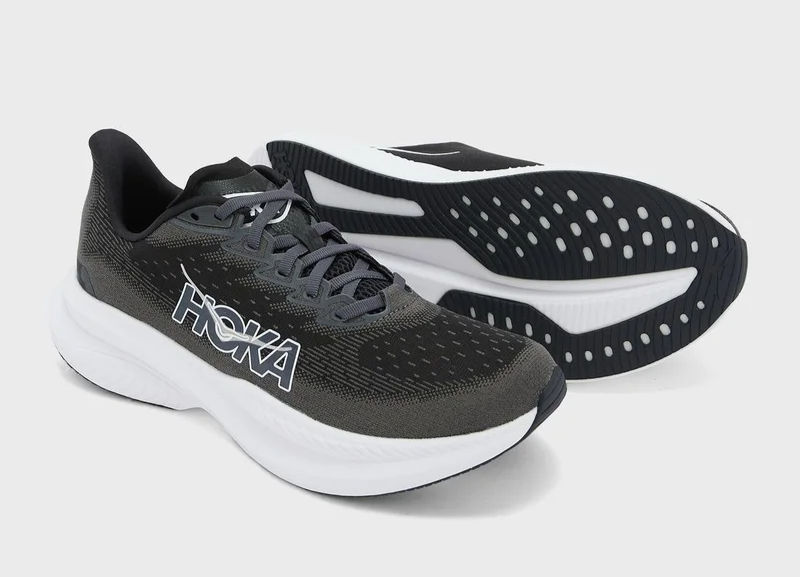
I'd started running a light trail in the mornings, and my Hoka Mach X2s — a shoe I genuinely love on the road — just weren't cutting it once the terrain got uneven. So I went to what I already owned: the Merrell Agility Peak 5. Big mistake.
Running them on a light trail tore me apart. Too technical, way too stiff, built for a different kind of trail runner than the one I actually am. That's what kicked off the hunt — I wasn't looking for a hardcore technical trail shoe, I was looking for something that split the difference: the cushion and everyday comfort of the Mach X2, crossed with enough trail conditioning to actually handle dirt, gravel, and light singletrack without punishing me for it.

Mount to Coast? Never Heard of Them
Who are they?
Mount to Coast was founded by industry veterans who came out of Nike, Brooks, and New Balance, working off a simple premise: ultrarunners were being underserved by mainstream running shoes built for a few hundred miles of casual use, not the kind of mileage ultra-distance training and racing actually demands.
The company is based out of Hong Kong and officially launched in the US in April 2024. Co-founder Yeti Zhang has been public about the brand's ambition — the stated goal is to become the number one ultra-running brand in the world by 2030. That's not a small claim for a company that's only been around for a couple of years.
And it's not just talk. Their earliest prototype won the ISPO Award back in November 2023, and from there, they put in the actual work — over 300 runners logged more than 90,000 miles of testing across roughly 20 months before the shoe that would become the R1 and S1 ever hit the market. Since then, they've built their credibility less through marketing and more through what their shoes have actually done in competition: Justin Montague broke every stage record and the overall course record of the 854-mile JOGLE race running in a pair of R1s, and Meg Eckert set a women's 6-day world record, covering 603 miles, also in R1s.
When your shoe is on the feet of people breaking world records, you don't need to say much else.

How I got sucked in as a Coast loyalist
Honestly, it only took one video to convince me — watching Thomas Neuberger run an ultra through the Grand Canyon in a prototype pair of these shoes. There's something about ultra-running that hits different than any other sport. It's almost a primal thing — a connection to yourself, to God, and to His creation, that I don't think any other sport can give you in quite the same way. And when a brand builds its whole identity around being the bridge that can take you there, I'm all in.
What I respect about Mount to Coast is how simple they keep it. No gimmicks, no flashy influencer campaigns trying to convince you the shoe is something it's not — they let the product speak for itself, and it does.
The brand story isn't really about the company at all; it's about the passion that brings runners together, and the team behind it seems to genuinely believe that.
I'll be honest — I'm not an ultra-runner. I don't have any current plans to become one. But wearing these shoes makes me want to. That's good marketing. That's a brand doing its job.
What's the Hype All About?
Stripping Down the H1

Let's actually get into the shoe itself, top to bottom.
The Upper — Two Materials, Not One
The first thing worth knowing is that this isn't a single-material upper. It's actually two different fabrics working together. The top portion, around the laces and midfoot, is a jacquard weave — this is the part doing the comfort-forward, adaptive work, flexing with your foot as it moves.
The lower portion, down around the toe box and sides, is a heavier-duty woven fabric reinforced with aramid fibers — the same fiber family as Kevlar, which by weight is actually stronger than steel. Once you think about it, the logic makes sense: stretch and give where your foot needs to move, armor where the shoe is actually taking abuse from rocks, roots, and trail debris.
The Lacing System (TUNEDFIT)
This is a dual-zone lacing setup, not one continuous lace running the whole shoe.
The rear and midfoot use standard eyelets, laced the traditional way. The forefoot has a separate quick-lace, cinch-style cord — closer to what you'd see on a Salomon. The two zones tighten completely independently of each other, so you can crank down the front for lockdown while leaving the rear more relaxed, or the other way around.
This was clearly built with ultra-runners in mind, since feet swell significantly over long miles and this lets you make quick adjustments without fully re-lacing. I'm not dealing with that kind of mileage-induced swelling in my own running, but even so, the lockdown feels genuinely dialed in — no dead space, no slipping around.

The Foam (CircleCELL)
The midsole is Mount to Coast's proprietary CircleCELL foam, which is just a fancy marketing term for Supercell tech. And it runs full-length, heel to toe. It's not an overly plush, sink-in kind of foam, and it's not firm either — it sits right in that middle zone, which is exactly what you want out of a shoe that's meant to do a little bit of everything rather than excel at one extreme.
Here's a comparison that's stuck with me: it's like deflating a tire slightly for better traction off-road. The foam in this shoe does something similar — a little more give and ground contact than you'd get from a max-stack shoe — and that's part of why it handles mixed terrain as confidently as it does.
There's good pop and rebound here for what this shoe is. It's not chasing an elite race-foam feel — it's tuned more toward everyday versatility than maximum energy return, which tracks with how the whole shoe is positioned.
There's no plate in this shoe at all, and honestly, it doesn't need one. It holds its own on responsiveness through the foam and shape alone — proof that a plate isn't the only way to get a shoe to feel lively underfoot.
The Insoles are removable, which is a nice touch a lot of brands skip. The arch feels noticeably high when you're just standing in them, but the moment you actually start running, you stop noticing it entirely.

The Outsole and Grip
Grip is genuinely good on road, gravel, and dirt. Where it falls short is mud — it gets a little slippery there, and that's worth calling out directly, because I think most people who buy a road-to-trail hybrid are specifically hoping it can handle mud.
That's a fair critique of the category promise versus what this shoe actually delivers. Maybe one day Mount to Coast switches to something like a Vibram compound. But if they keep refining their own rubber and it keeps getting better, I'm not complaining either.
The lugs are tiny, only 2mm, but they punch above their weight. I genuinely feel no real difference switching from road, to a gravel pit, to dirt. It's only in mud where that shallow lug depth shows its limit.
The Drop — What It Is, and Why It Matters
For anyone who isn't deep into shoe specs, heel-to-toe drop is simply the height difference between the heel stack and the forefoot stack. A higher drop pitches your foot forward more at landing, which tends to favor heel strikers. A lower drop keeps the foot flatter, which tends to suit mid- or forefoot strikers and can encourage quicker turnover. It matters because it affects how much work your calves and Achilles are doing versus how much your foot naturally rolls forward — the "right" drop is personal, tied to how your foot actually hits the ground rather than what simply feels cushioned in a store.
Mount to Coast lists the H1's drop at 6mm, Heel 35 mm, Forefoot 29 mm which puts it right in the middle — not aggressive, not flat. Independent lab testing has actually measured the real-world drop closer to 8.1mm, a little higher than advertised, which is a good example of listed spec versus what a shoe measures out to in practice.
Looking across their whole lineup, the drop numbers map almost perfectly onto each shoe's purpose: the T1 trail shoe sits at 4mm for more ground feel on technical terrain, the H1 sits at 6mm as the hybrid, the R1 road racer sits at 8mm for efficient heel-striking over long flat miles, and the P1 stability trainer sits at 10mm for a more traditional, forgiving ride.
The H1 landing in the middle of that spread isn't an accident — it's exactly why it works as a hybrid in the first place.
This shoe is also very lightweight for a trail shoe. Often I see trail shoes heavy and unbearably stiff maybe to compensate for the terrain they might be involved in, but the Mount to Coast H1 punches well above it's weight (pun intended) with a listed weight of 8.8oz or 249g

Who Is the H1 For?
Here's where I want to be upfront about where I'm coming from. I'm not the guy running 80-mile weeks or lining up for Western States. I'm an average dude with a full-time job who found a shoe that's genuinely worth the money for the running I actually do.
And because my day job is marketing, I'm not just reviewing the shoe — I'm reviewing whether the marketing holds up once you're the one actually wearing it. A lot of gear reviews stop at "does it perform." I think the more useful question is "does the story the brand told you turn out to be true," and with the H1, I'd say largely, yes.
If you're someone who wants a true road-to-trail hybrid, who'd rather have lightweight, versatile cushioning than a plated "super trainer" feel, or who's drawn to the sustainability angle behind the CircleCELL foam, this is a strong shoe to put on your list.
If you've got wide feet, you're specifically chasing serious mud-running capability, or you want max-stack cushioning above everything else, this probably isn't the one — and that's fine. Not every shoe needs to be for everyone.
Overall, this is a new favorite in my lineup. I plan to put this thing to work whether I'm training or racing. Honestly, I like them enough that I'd be willing to pick up Mount to Coast's dedicated road shoe too, just to see if the rest of the lineup lives up to the same standard.

Check out More Reviews on our YouTube Channel


Comments